
If you’re on a marketing team, you know how wild things can get without a solid creative intake and request system. When you build a system that actually works, you can capture all project details in one spot and send requests straight to the right people. That streamlines the whole creative workflow. No more digging through emails or losing track of info, just faster project starts and way better teamwork.
When teams use marketing request form software and creative workflow tools, they can juggle all kinds of projects without confusion. These tools make it easier for clients and creatives to talk to each other, and approvals or feedback don’t get lost in the shuffle.
If you set up a system that scales with your needs and helps everyone work together, you’ll keep things running smoothly, even as the workload grows. Honestly, this kind of system becomes the backbone for creative teams who want to move fast and actually get stuff done.
Key Takeaways
- A clear intake system cuts down on delays and mix-ups in creative projects.
- Automation sends creative requests right to the right teammates.
- Workflow tool integration makes it easier to track projects and collaborate.
Key Steps to Designing a Scalable Creative Intake and Request System

You need clear goals and the right tools to build a system that actually scales. First, figure out what your marketing and creative requests really need.
Pick tools that let you set custom fields and collect info in a way that makes sense for your team. Make sure your intake process is smooth and keeps mistakes to a minimum.
Clarifying Marketing and Creative Request Needs
Start by defining what kinds of creative requests your system needs to handle. Is it marketing campaigns, design projects, video production, or something else? Knowing this helps you figure out what info you need for each request.
Clients and internal teams should lay out the project goals, target audience, and what they want delivered. Don’t forget deadlines and budget limits, they matter a lot.
Getting clear up front stops endless back-and-forth and lets creative teams jump in with all the right info. A solid intake process keeps projects moving and makes it easier to prioritize requests.
Selecting Effective Form Builders and Custom Fields
Choosing the right form builder is a big deal. Whether it’s Google Forms, Typeform, or Jotform, each has its own perks, like custom fields or easy workflow integrations.
Go for something that works with your creative workflow software. Custom fields let you capture project details that matter. Dropdowns help with project types, and file uploads make sure you get the right assets.
Make some fields mandatory, like client contacts, project scope, and deadlines. If your form builder supports automation, you can send requests to the right people automatically and speed things up.
Ensuring Seamless Data Collection and Integration
You want data collection to be simple and reliable. The intake system should drop every submission into a central spot the creative team can access.
If you connect your system to marketing request form software or creative collaboration tools, you can trigger review and approval workflows right away. Syncing with project management tools also helps avoid double entry.
Automated notifications and reminders keep everyone in the loop. This keeps projects on track and stops bottlenecks before they start.
Establishing a Streamlined Intake Process
Keep the intake process easy to use and straightforward. The form should walk users through step by step, only asking for what’s really needed.
Add examples or tooltips to help with tricky fields like project objectives. Before rolling it out, test the form and workflow to catch any weird issues.
Set up automation rules so requests get reviewed and assigned based on what they are. That way, nothing gets stuck waiting for someone to notice it.
Using clear communication channels and real-time status updates through your request form software helps everyone stay on the same page and cuts down on endless follow-up emails.
Integrating Creative Workflow and Collaboration Tools for Marketing Teams
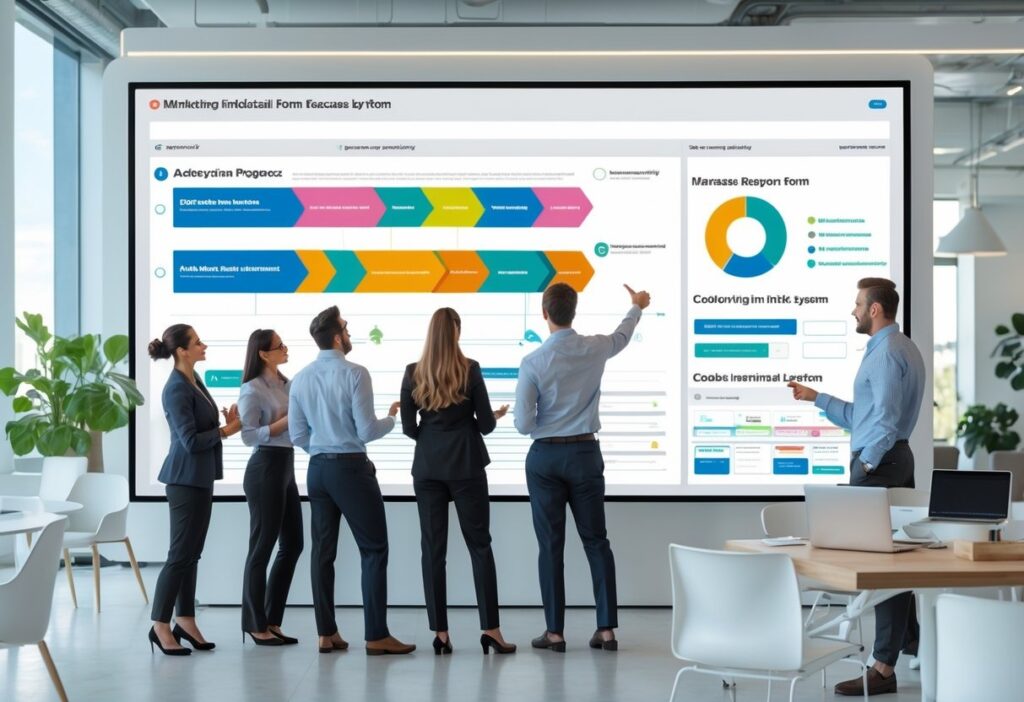
When you connect your tools the right way, marketing teams can handle requests, knock out tasks, and get approvals way faster. A connected system keeps things transparent and helps everyone know what’s happening.
This all helps teams create great creative output that actually lines up with the marketing strategy.
Connecting Intake Forms to Project Management Systems
Marketing request form software pulls in detailed briefs and sorts requests neatly. If you hook these forms up to project management platforms like Asana, every request turns into a tracked task right away.
This setup kills manual entry mistakes and keeps things moving. Teams can assign and prioritize tasks faster, and everyone knows who’s doing what and when. Custom fields on intake forms help you grab key info like campaign goals, which makes the whole workflow smoother.
Linking intake forms with project boards gives your team a real-time view of all incoming work. It’s a huge help for making quick decisions and managing resources.
Automating Workflow With Creative Collaboration Software
Creative collaboration software makes it easy for teams to work together on projects in real time. You can share feedback, edit assets, and track progress, all in one place.
Automations can move tasks or ping the team when feedback’s done. Routine steps like review cycles and approval reminders get handled automatically, which clears up bottlenecks.
Version control keeps everyone on the same page, so you don’t end up with five different drafts floating around. If you sync with your CRM, marketing teams can make sure creative work matches up with customer data and campaign goals.
These tools help everyone know their role and deadline. By automating the workflow, teams can focus more on strategy and creativity, not chasing down tasks.
Optimizing Ad Production and Asset Approvals
Creative workflow software built for ad production keeps the whole asset process tight. Teams can work on briefs, handle revisions, and get content approved faster.
You can centralize comments and markups, which means creative approval cycles speed up a lot. Some must-have features:
- Approval workflows with permissions built in
- Version history so you can track changes or go back if needed
- Integration with social or scheduling platforms for direct publishing
When you optimize this process, campaigns don’t stall out because of missing feedback or lost files. Ads get launched faster and still hit the quality bar.
Managing ad production in creative collaboration software keeps everyone in the loop and helps campaigns run smoother.
Frequently Asked Questions
A scalable creative intake and request system should handle different project types, automate workflows, and make it easier for teams to talk to each other. It also needs to support file uploads, route requests properly, and track project progress so things don’t get stuck.
What are the key features to look for in creative workflow software?
Look for automated request routing, real-time collaboration tools, version control, and customizable approval steps. The software should connect with your other tools and give you a clear view of project status.
How can marketing request form software enhance team productivity?
Marketing request form software puts all project info and files in one place, so you’re not drowning in emails. It speeds up project kickoff because clients can send everything you need up front. Automated notifications and task assignments help everyone stay on schedule.
What are the best practices for implementing a creative collaboration software system?
Set up clear workflows and roles before you start. Standardize your intake forms so you always get the info you need. Train the team so everyone’s comfortable with the tools, and test your workflows before rolling them out for real.
Build a Request Flow That Finally Matches the Way Your Team Works
A scalable intake system only works when every request enters your pipeline clearly, cleanly, and with the right context.
When teams know exactly what’s coming in, who owns it, and what needs to happen next, creative work stops feeling chaotic and starts moving with real momentum.
Connecting forms, workflows, and collaboration tools creates the kind of clarity that keeps projects on track, even as the volume grows.
AdFuse supports teams in building that structure by organizing creative requests, centralizing assets, and keeping approvals tight and predictable.
If you’re ready to simplify how work enters your pipeline and flows through it, explore how AdFuse can support your process.